
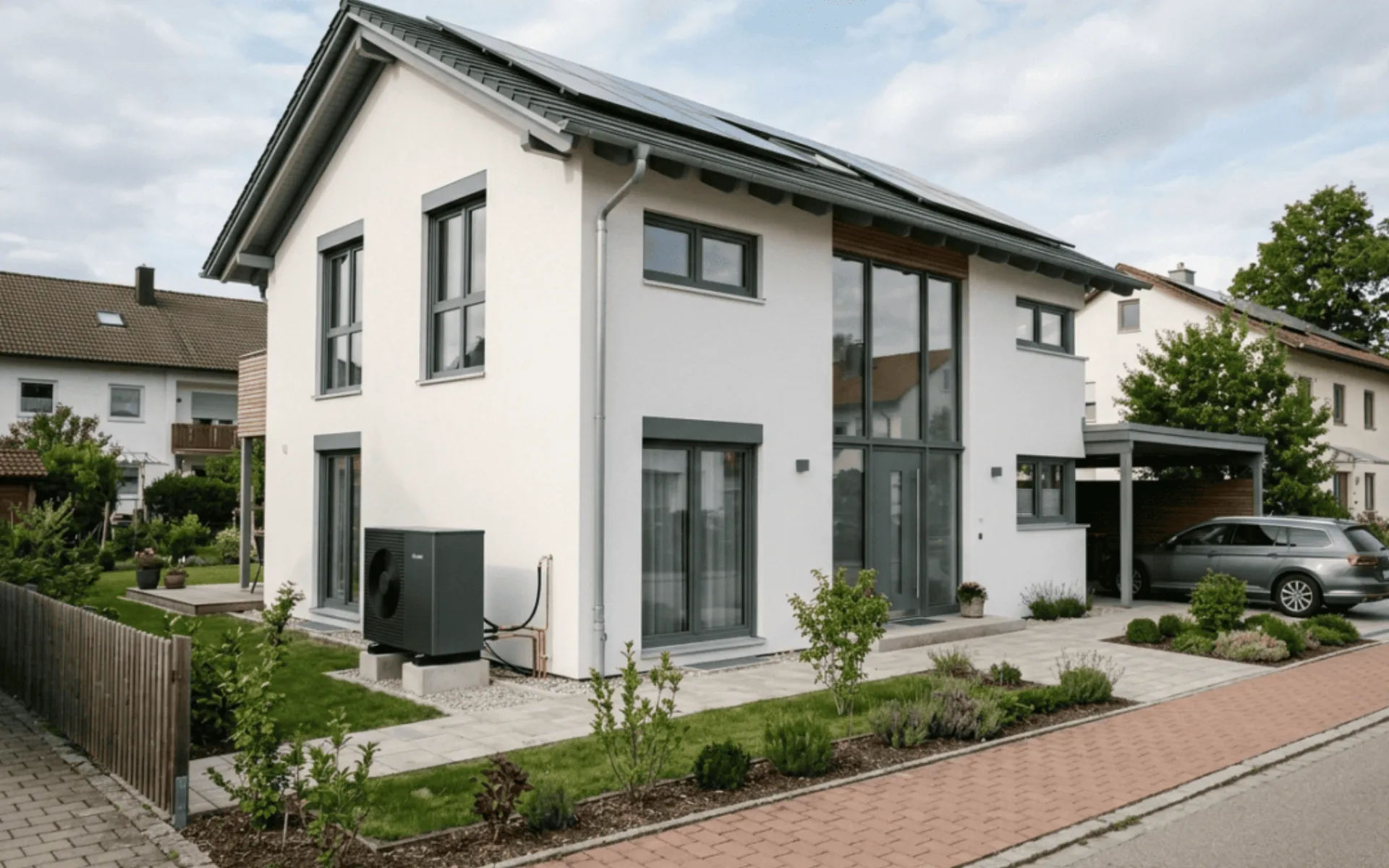
Discover the benefits of heat pumps
What does it cost to buy and install a heat pump?
Heat pump costs 2026: find out what a heat pump costs including installation, which subsidies are possible and what to look for when buying.
Important: Do not compare only the price of the heat pump, but always the total cost including installation, fitting and possible additional work.
Costs of a heat pump
A heat pump can reduce a house’s heating costs in the long term and at the same time cut the use of fossil fuels. But before a new heat pump is installed, many homeowners have important questions: What does a heat pump cost in 2026? How high are the installation costs? Which heat pump subsidies are there in 2026? And is a heat pump worth it at all?
In this guide you will learn, simply and clearly, how high heat pump costs can be in 2026, which subsidies are possible and what you should look out for when planning.
What does a heat pump cost in 2026?
The heat pump costs in 2026 depend on various factors. These include the size of the building, the heating output required, the type of heat pump and the necessary conversion of the existing heating system.
For a single-family home, the total cost of a heat pump including installation, fitting and additional work can quickly amount to several tens of thousands of euros. An air-to-water heat pump is often cheaper to install than a ground-source or groundwater heat pump, as those systems may require additional work such as earthworks or drilling.
4 tips for saving on heat pump costs
Compare total costs
A cheap unit can end up considerably more expensive because of high fitting and additional costs. So do not compare only the price of the heat pump, but always the complete offer including installation, fitting and necessary additional work.
Have the heating load calculated
The heat pump should fit the actual heating load of the building closely. A system that is too large can cause unnecessarily high purchase costs and impair efficient operation. A heat pump that is too small, on the other hand, may not deliver enough heating output on cold days.
Check subsidies before placing the order
The subsidy conditions can change. In addition, certain requirements and steps must be observed before work begins.
So check the current subsidy conditions before you place an order for the new heating system.
Get several quotes
If possible, get two or three quotes from specialist firms. This makes it easier to spot price differences in the heat pump, installation and additional work.
Pay attention not only to the final price but also to which services are included in the quote.
What costs arise when installing a heat pump?
When buying a heat pump, you should not consider only the price of the unit. The possible heat pump costs including installation include, for example:
- Heat pump and technical components
- Fitting and installation
- Adaptation of the heating system
- Hot water tank
- hydraulic balancing
- Electrical work
- necessary ancillary measures
- Removal and disposal of the old heating system
That is why the total price of the heat pump including installation is what you should always compare. A low unit price does not automatically mean that the whole heating system will be cheaper.
Which heat pump is the cheapest?
Residential buildings are often fitted with an Air-to-water heat pump that uses the outside air as its heat source and normally needs no ground probes or elaborate drilling. As a result, installation can be simpler and cheaper than with other heat pump systems.
A ground-source heat pump can work particularly efficiently. However, earthworks or drilling can increase the investment costs considerably.
A groundwater heat pump can also be an interesting solution if the local conditions are suitable. Whether this option is worthwhile depends, among other things, on the plot, the geological conditions and the existing heating system.
Which heat pump is suitable for a single-family home?
Which heat pump is suitable for a single-family home does not depend on the purchase price alone. Decisive factors include:
- heating load of the building
- Insulation
- existing radiators or underfloor heating
- required flow temperature
- plot and available space
- existing heating system
That is why professional planning should take place before you buy.
Heat pump subsidy 2026: how much money is available?
The heat pump subsidy for 2026 can significantly reduce the investment costs of a new heating system. Heating subsidies for private individuals are handled by KfW.
Since 21 July 2026, the basic subsidy has generally been 30 % of the eligible costs. Depending on your personal circumstances, further bonuses may be added.
Which bonuses are there in the heat pump subsidy scheme?
For heat pumps, under certain conditions a climate speed bonus (Klimageschwindigkeitsbonus) of 16 % may be possible. This bonus may come into question, for example, if a correspondingly old or inefficient existing heating system is replaced and the other subsidy conditions are met.
For owner-occupiers, an income bonus (Einkommensbonus) may also be possible. This depends, among other things, on the taxable household income.
Under certain conditions, the subsidy can reach up to 80 % of the eligible costs in total.
For a single-family home, currently up to 28,000 euros of eligible costs are taken into account. This means the maximum possible subsidy can cover a considerable part of the investment for certain households.
Important: the actual subsidy amount depends on your personal circumstances, the existing heating system, the planned heat pump and the subsidy conditions applicable at the time.
When should you apply for the subsidy?
It is before the measure begins that the subsidy conditions should be checked. In addition, certain requirements and steps must be observed.
Anyone who wants to buy a heat pump should therefore not simply place the order first and apply for the subsidy afterwards. The current KfW requirements should be checked before placing the order.

Is a heat pump worth it in 2026?
Whether a heat pump is worthwhile cannot be answered in general terms. Profitability depends heavily on the building, the energy consumption, the electricity and heating costs and the investment costs.
A heat pump can be particularly attractive if a house is well insulated and can be heated with relatively low flow temperatures.
Combining a heat pump and photovoltaics can also be attractive. Part of the electricity needed for the heat pump can then be provided by self-generated solar power.
With an older building, on the other hand, it should first be checked whether the radiators, insulation and heating system are suitable for operating a heat pump.
A heat pump is therefore not an automatic savings machine. An incorrectly sized or poorly planned system can lead to unnecessarily high investment and operating costs.
Heat pump in an older building (Altbau): is that possible?
In principle, a heat pump can be used in an older building as well. What matters is not the age of the building alone, but above all its energy condition.
The existing insulation, the heating surfaces and the required flow temperature are particularly important.
Before deciding, it should therefore be checked whether the existing heating system allows sufficiently low flow temperatures. In some cases, replacing individual radiators or making energy improvements to the building can make sense.
Conclusion: what does a heat pump really cost?
The heat pump costs in 2026 depend heavily on the building, the type of heat pump and the installation effort required. That is why there is no flat price that applies to every house.
Besides the price of the heat pump, fitting, installation, electrical work, adaptations to the heating system and other possible additional work must also be taken into account.
The state heat pump subsidy for 2026 can significantly reduce the investment costs. For private individuals, the basic subsidy is generally 30 % of the eligible costs. Under certain conditions, additional bonuses may be added. For certain owner-occupiers, the subsidy can reach a total of up to 80 % of the eligible costs.
Anyone considering a heat pump should therefore not look only at the purchase price. What matters are heating load, energy consumption, total cost, subsidies and long-term operating costs.
An individual assessment and several quotes can help you find a suitable and economical solution for your own building.
Frequently asked questions about heat pumps
1. What does a heat pump cost including installation?
The heat pump costs including installation depend heavily on the building and the heat pump system chosen. Besides the unit, there may be costs for fitting, electrical work, adaptations to the heating system, a hot water tank and other work.
2. How high is the heat pump subsidy in 2026?
In 2026 the basic subsidy is generally 30 % of the eligible costs. Depending on the circumstances, further bonuses may be added. For certain owner-occupiers, a total of up to 80 % is possible.
3. Which heat pump is suitable for a single-family home?
Single-family homes are often fitted with an Air-to-water heat pump as their heating system. Whether this solution is suitable for a particular house depends, among other things, on the heating load, insulation, heating surfaces and the required flow temperature.
4. Is a heat pump worthwhile in an older building?
Yes, a heat pump can work in an older building as well. What matters is not the year of construction alone, but above all the energy condition of the building and the required flow temperature.
5. Can you combine a heat pump with photovoltaics?
Yes. A photovoltaic system can cover part of a heat pump’s electricity demand. This can make the combination of a PV system and heat pump particularly attractive.